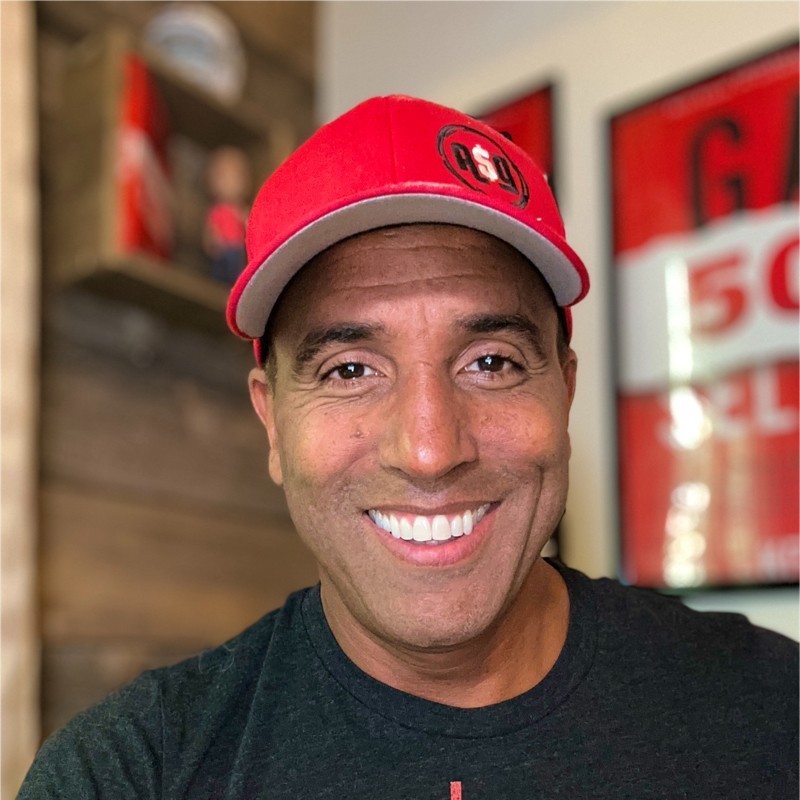
I had been chasing Keenan for years before he finally said yes to joining the Conquer Local podcast. His book Gap Selling has sold over 65,000 copies, and I truly believe it is required reading for any salesperson who wants to get serious about the craft. When we finally sat down, Keenan brought the passion, the straight talk, and the unfiltered opinions that have made him one of the most watched voices in sales on LinkedIn and YouTube.
What I love about Keenan is that he does not sugar coat anything. He calls it a CRM because everyone else does, even though he thinks it should be called a Customer Management Interface. Either way, his message is clear. Great sellers sell on data, and they cannot do that without documenting what they learn.
Why Great Salespeople Sell on Data
Keenan’s core belief is that every customer has a unique story, and your job as a seller is to understand that story and write it down. As he told me:
“Every single customer has a unique set of problems. Every customer is different. And great salespeople sell on data. We don’t talk about this enough.”
He compared it to going back to your doctor two months after a visit and having them ask, “Why are we here? What was going on?” That destroys trust. Yet we do it all the time in sales because we never bothered to capture the discovery conversation in the first place.
This connects directly to my thinking on why sales is a science, not a guessing game. You cannot build a predictable revenue engine if your reps are not capturing what they learn.
Most Discovery Is Shallow. Here Is How to Fix It
Keenan does not hold back when he talks about how poorly most sales teams run discovery. He pulled out the best analogy of the entire episode. He called them marriage questions.
If you ask someone, “Are you happy in your marriage?” they will almost always say yes. But if you follow up with questions like:
- When was the last time you had a fight about money?
- When was the last time you slept on the couch?
- When was the last time you surprised your spouse with flowers for no reason?
- How often do you fight compared to a few years ago?
Suddenly you get the truth. The same principle applies in sales. Surface questions give you surface answers. Specific, behavioral questions reveal the real problem.
As Keenan put it:
“You don’t know the problem. You don’t know the fucking problem. That’s the problem. Salespeople are so eager to close the deal that they couldn’t give two shits about the problems their customers actually have.”
Leadership vs. Coaching: Do Not Confuse the Two
I have long said there are no bad staff, only bad managers. Keenan agreed in spirit and then pushed me further. He drew a sharp line between leadership and coaching:
- Leadership is judging. It is the ability to make decisions that maximize the team, remove hurdles, and determine who belongs on the roster.
- Coaching is evaluation and feedback. It is helping the people on your roster get better at their craft.
He said it better than I can:
“Coaching is, hey, you did this. I saw that. I saw this behavior. This is the outcome you got. There’s no judging in coaching, only evaluating. Big difference.”
Most sales leaders confuse the two and end up delivering judgment inside a coaching session. That is why so many reps dread their weekly one on ones. The same lesson applies to how we scale a sales team from scratch to 50,000 channel partners.
Where Should a Coach Invest Their Time?
I asked Keenan the age old question. If you have eight reps, do you coach the top two, the middle four, or the bottom two? His answer surprised me. None of the above.
The best coaches invest where the upside is greatest. If your top producer is already operating near their ceiling, you give them peer level support, not heavy coaching. If you have a rep in the middle with enormous untapped potential, that is where you pour your energy. If someone does not have the raw ability, no amount of coaching will turn them into Tom Brady.
Sales intelligence tools like Gong, Chorus, and ExecVision help leaders see who needs what. Call recordings and transcripts reveal patterns that a single ride along never could.
The Coaching Tax on Scaling Sales Teams
One of the most common issues I see when companies grow fast is that new managers treat their weekly one on one as their entire coaching investment. That is not coaching. That is a meeting.
Real coaching includes:
- Listening to or watching recorded calls with the rep
- Giving specific, behavioral feedback tied to observable moments
- Running mock pitches and discovery drills
- Co-planning the next call or next deal, not just reviewing last week’s numbers
Where to Find More Keenan
If you want more Keenan, pick up Gap Selling, find him on LinkedIn, or check out his YouTube channel. As he told me, “If you can’t find me, I cannot help you.” And I believe him.
For more of my conversations with sales leaders and operators, read about what makes a great sales team.
What is your coaching rhythm with your top performers? I would love to hear what is working on your team.