Phil M. Jones joined me on the Conquer Local podcast to share his outcome based selling philosophy and the work before the work that separates top sellers from the rest.
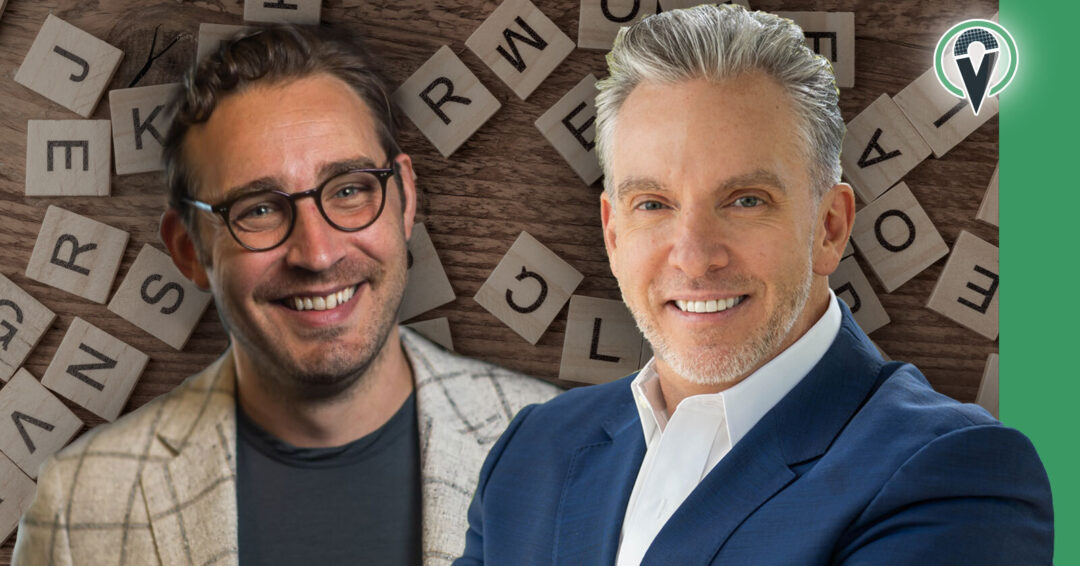
Some conversations stay with you. My sit down with Phil M. Jones, author of Exactly What to Say and a sales training juggernaut who has presented in 57 countries, was one of those. Phil runs Phil M. Jones International, has authored eight bestsellers, and now co-owns an agency called Orange and Gray that supports nearly a hundred of the top hearing care practices across the United States.
He also started a car washing business at 14 and was running a sales team for a major UK retail group at 18. The stories alone are worth the listen, but what I really wanted to pull out of Phil was his philosophy on outcome based selling and the work before the work.
The Teenage Entrepreneur Who Out-Earned His Teacher
Phil built his first business washing cars door to door as a teenager. By 15 he was earning the equivalent of $5,000 a month while his teachers asked why he was not showing up to class. When he applied for a management training program at 18, no one told him he was not qualified. Two weeks into onboarding, his mentor went on long term sick leave and Phil held the baby. A trial by fire.
His takeaway has guided everything since:
“You don’t have to be old enough. You just need to be good enough. And I was brave enough to try.”
The second part of that lesson is what makes it work. Phil learned that a job title does not give you respect. You earn respect by what you do, and the fastest way to earn it is to ask for help from people who have walked the path before you and be humble enough to apply what they share.
Exactly What To Say: The Magic Of Tested Words
Phil’s book Exactly What to Say started as Magic Words in 2010. He rewrote and relaunched it in 2017 and it has sold millions of copies since. The book is deliberately small. You can read it cover to cover in an hour. That is the point.
Underneath the 23 short examples sit 23 deeply researched psychological principles. Read as a checklist, it is a little book of phrases. Read as a framework, it gives a salesperson something Phil calls freedom within fences:
- Tight structure that reduces the paralysis of blank page syndrome
- Enough personality space to stay authentic
- A predictable path to small wins that build real confidence
Phil’s observation that confidence cannot exist without experience is exactly why this framework matters. Give a rep a precise phrase that works, and every successful use becomes a rep of experience they can bank on.
The Finish Line Is Not When You Swipe The Card
This is the section of our conversation I want every sales leader to read twice. Phil pushed hard on the Hollywood version of sales where the celebration is the signed contract or the suitcase of cash. His argument is that the real finish line lives further down the track.
He used a wedding dress shop as the analogy. Most shops celebrate when she says yes to the dress and the card is swiped. A smarter shop celebrates the wedding day itself, when the product performs. The smartest shop celebrates the day she sees herself in the photographs, because that is the moment she decides if she made the right choice. Build a business around celebrating that moment and everything changes.
That is outcome based selling in one image. Move the celebration line to the point where the customer can measure the value of the promise, and suddenly sales, marketing, product, and customer success are aligned because they are all measured by the same outcome.
The Integrity Test Before You Shake A Hand
I asked Phil when the integrity piece became central for him. His answer came back to a simple belief:
“If you’re not convinced, you cannot convince.”
If you cannot sleep at night knowing that you believed the recommendation you just made was the right one, you cannot do the work. Phil has walked away from industries and speaking fees where the product did not line up with his principles. That is a muscle most sellers never build, and it is one of the biggest differentiators in a market where consumers can cross check everything online before you finish your pitch. I wrote more about that trust layer in the trust matrix.
Only Two Departments In Any Business
Phil believes every business has only two departments. There is the sales department, and then the sales support department. Manufacturing, customer service, finance, and ops all support the promise the sales team made. When a promise is broken, the company has to ask a real question. Did customer service fail, or did the sales team promise something the rest of the business could never deliver?
That reframe alone is worth the price of admission. If you want to find out where your revenue engine is leaking, start by mapping the promises your reps are making and compare them to what the business can actually deliver.
The Work Before The Work
I asked Phil how long he preps for a keynote. The answer blew me away. He walks the stage the night before while everyone else is in the bar. He prepares a backup for the backup. He plans how he will be introduced, which direction he exits, who he hands back to. All of that so he can be fully present in the moment.
Then he said the line that every seller should tattoo somewhere:
“People think they need to be brilliant in the moment. You need to be brilliant before the moment, and then the moment can be brilliant.”
That applies to a keynote in front of a thousand people and it applies to your next discovery call. The reps who put in the work before the call earn the right to be fully present during it. Everyone else is winging it and hoping. For more on what that looks like in practice, see 10 elements of a successful sales pitch.
Where To Go From Here
Pick up a copy of Exactly What to Say. Read it in an hour. Then pick three of the 23 phrases and practice them on live calls this week. Note which ones change the temperature of the conversation. That is how you turn a small book into a big lift. Then move your finish line. Decide what moment you want your customer to celebrate and build the rest of your revenue engine around delivering it.